


Hey there! As a supplier of Brush To Metal Anilox Rollers, I often get asked about the noise level during their operation. In this blog, I'll share some insights on this topic and give you a better understanding of what to expect.
First off, let's talk about what a Brush To Metal Anilox Roller is. It's a crucial component in the printing and coating industry. These rollers are designed to transfer a precise amount of ink or coating onto a substrate. They work by having a metal surface with a pattern of cells that hold the ink or coating, and a brush that helps in the transfer process. You can learn more about them here.
Now, onto the noise level. The noise generated during the operation of a Brush To Metal Anilox Roller can vary depending on several factors. One of the main factors is the speed at which the roller is running. Generally, the faster the roller spins, the louder the noise. This is because at higher speeds, there's more friction between the brush and the metal surface, as well as between the roller and other components in the printing or coating machine.
Another factor that affects the noise level is the quality of the roller itself. A well - made Brush To Metal Anilox Roller with smooth surfaces and proper alignment will produce less noise compared to a poorly manufactured one. The materials used in the construction of the roller also play a role. For example, if the metal used has a high density and good vibration - damping properties, it can help reduce the noise.
The type of brush used on the roller is also important. Different brush materials and bristle configurations can result in different noise levels. A brush with stiff bristles might create more noise as it rubs against the metal surface compared to a brush with softer bristles.
Let's take a look at some real - world scenarios. In a small - scale printing shop, where the Brush To Metal Anilox Roller is running at a relatively low speed, say around 50 - 100 revolutions per minute (RPM), the noise level might be quite tolerable. It could be similar to the background noise in an office, perhaps around 40 - 50 decibels (dB). You can carry on a normal conversation without having to raise your voice too much.
However, in a large - scale industrial printing or coating facility, where the rollers are running at high speeds, sometimes exceeding 500 RPM, the noise level can be significantly higher. It could reach up to 70 - 80 dB or even more. At these levels, it can be quite uncomfortable for the workers in the area, and proper hearing protection should be worn.

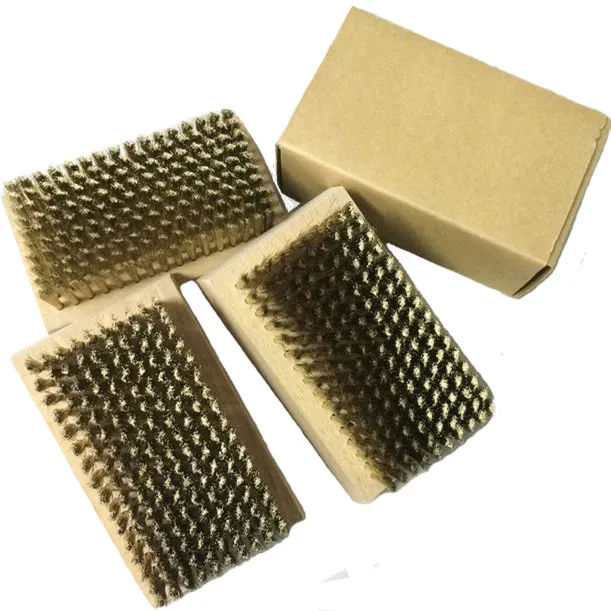
To reduce the noise level, there are several measures that can be taken. One option is to use a Doctor Blade. A doctor blade helps in controlling the amount of ink or coating on the roller and can also reduce the friction between the brush and the metal surface, thereby lowering the noise.
Another way is to use a Knurling Tool. A knurling tool can be used to create a textured surface on the metal roller, which can change the way the brush interacts with the surface and potentially reduce the noise.
Proper maintenance of the Brush To Metal Anilox Roller is also crucial. Regular cleaning of the roller to remove any ink or debris buildup can prevent uneven wear and reduce noise. Lubricating the moving parts of the roller and the associated machinery can also help in reducing friction and noise.
In addition to the above, the design of the printing or coating machine itself can have an impact on the noise level. A machine with good sound - insulation features can help contain the noise within the machine and reduce the overall noise in the working environment.
Now, you might be wondering if the noise level is a deal - breaker when it comes to choosing a Brush To Metal Anilox Roller. Well, it depends on your specific requirements. If you're in a small - scale operation where noise is not a major concern, then you can focus more on the performance and cost of the roller. But if you're in an industrial setting where worker safety and comfort are important, then you need to pay close attention to the noise level.
We, as a supplier of Brush To Metal Anilox Rollers, understand the importance of noise reduction. We offer rollers that are designed with noise - reduction features in mind. Our team of experts can also provide advice on how to further reduce the noise level in your printing or coating process.
If you're interested in purchasing a Brush To Metal Anilox Roller or have any questions about the noise level or other aspects of our products, we'd love to hear from you. We can have a detailed discussion about your specific needs and help you find the best solution for your business.
In conclusion, the noise level during the operation of a Brush To Metal Anilox Roller can vary based on multiple factors, but there are ways to manage and reduce it. Whether you're a small - scale printer or a large - scale industrial manufacturer, we have the right products and expertise to meet your requirements. So, don't hesitate to reach out and start a conversation with us.
References
- Industry reports on printing and coating machinery noise levels
- Manufacturer's specifications for Brush To Metal Anilox Rollers