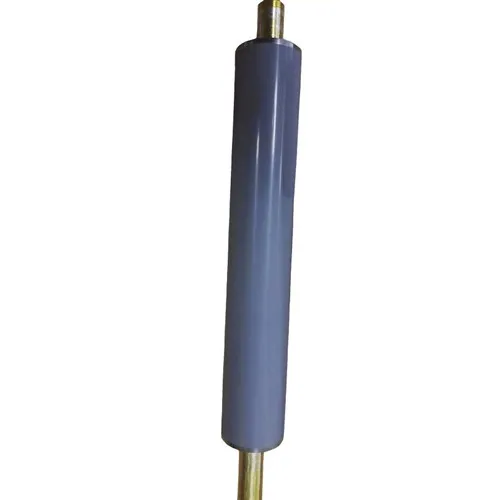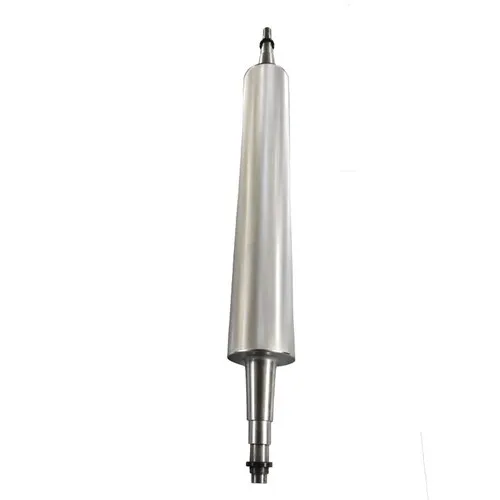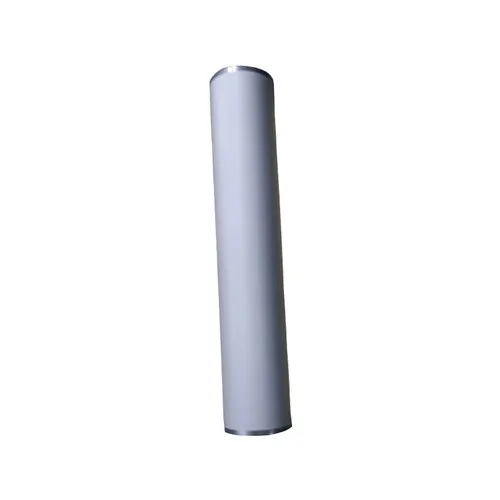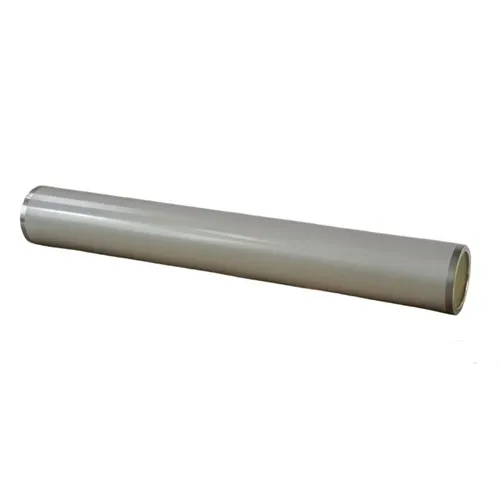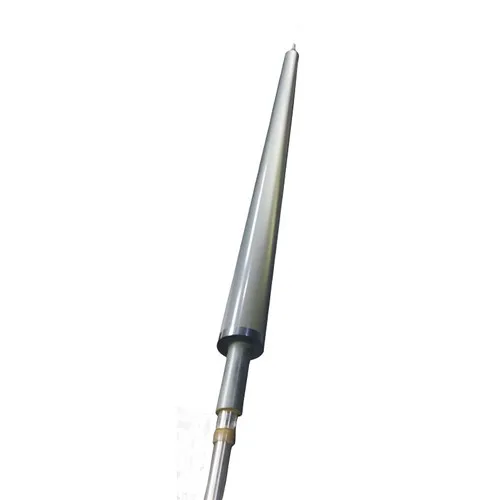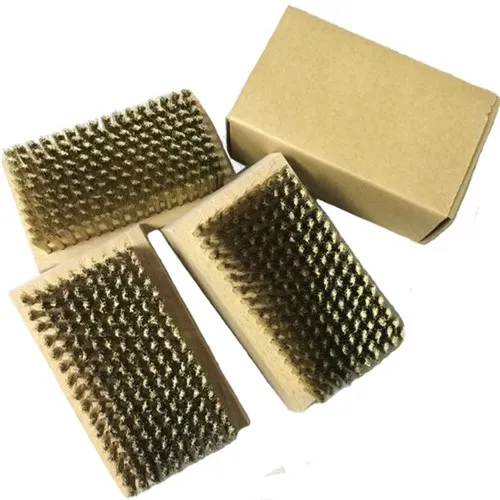




Sandblasting is a key process in the surface treatment of embossed rollers, primarily used to improve surface roughness and enhance the adhesion of subsequent plating or coatings, especially indispensable in the manufacturing process of ceramic embossed rollers.
The pattern processing of embossed rollers begins with communication with the customer and the use of CAD (Computer-Aided Design) software to accurately draw the pattern, generating detailed two-dimensional and three-dimensional models. Mechanical engraving uses a high-precision CNC engraving machine to cut the roller surface with a tool according to the pre-designed pattern model, suitable for processing larger-sized patterns with relatively simple and bold lines. Laser engraving uses a high-energy laser beam focused on a specific area of the roller surface, causing the material to melt, vaporize, or ablate instantaneously, thus forming the desired pattern. It has extremely high precision and flexibility, capable of processing very fine and complex patterns.
Etching is another common method for creating patterns on embossed rollers. Electrolytic etching uses a master mold as a conductive cathode and an electrolyte as a medium to concentrate the etching process on the processed area. Chemical etching utilizes a chemical-resistant coating to remove erosion, concentrating the effect on the desired area. Photo-etching technology forms a uniform, layered photosensitive chemical-resistant coating on the metal surface. Through a film, exposure to ultraviolet light or other methods is applied, followed by developing to form the desired shape of the chemical-resistant coating. Then, an acid or alkali etching bath is used to chemically or electrochemically erode the exposed areas, dissolving the metal. This process is particularly suitable for mass production, ensuring high consistency of patterns.
The complete processing flow of embossing rollers includes preliminary design, raw material selection and pretreatment, engraving or etching, post-processing, and quality inspection. The processing flow for metal embossing rollers is: metal roller base → copper plating → engraving → chrome plating. The processing flow for ceramic embossing rollers is: metal roller base → copper plating → engraving → sandblasting → ceramic material spraying → polishing; or metal roller base → ceramic material coating → polishing → laser engraving. After pattern processing, the roller surface needs to be cleaned and then surface treated, such as chrome plating or nitriding. For quality inspection, a coordinate measuring machine is used to accurately measure the dimensional and shape accuracy of the pattern. Roughness and hardness of the roller surface are tested using a roughness tester and hardness tester, and actual embossing tests are conducted.
Regarding innovative technologies, Pinghu Tianyang Printing Co., Ltd. has applied for a patent for an "Adjustable Wax Paper Embossing Roller Device," which improves the efficiency of pattern changing through a rotary multi-station structure, simplifying the traditional downtime disassembly and replacement process that required several hours into a rotational positioning operation completed in minutes. Vinda Paper has obtained a patent for an "Embossing Device for Paper Production," which allows adjustment of the embossing depth of the embossing roller without replacing it.